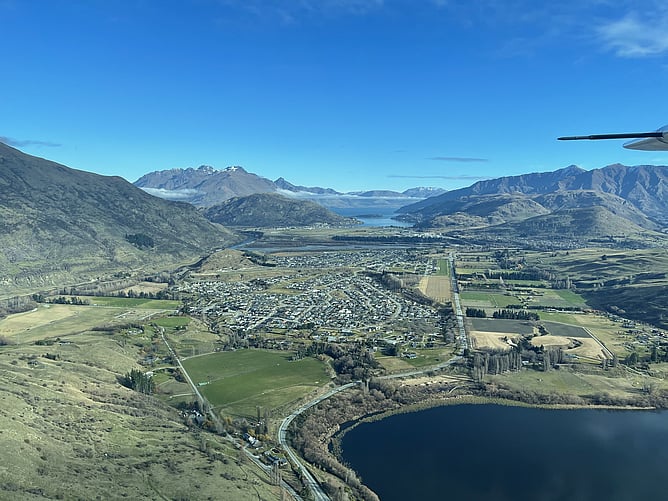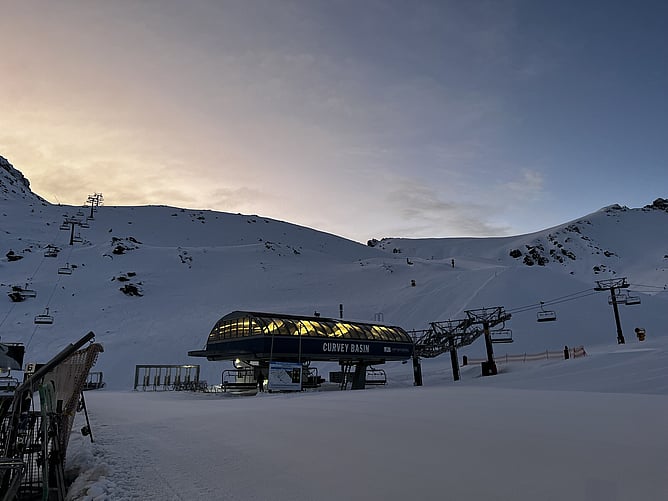
You've just been down to Queenstown. You loved it. And now you're wondering whether you should own a piece of it.
You're not the only one asking. I have spoken to 100s of potential investors now, and Queenstown has been a hot location to ponder. "I want an investment property in the Queenstown region, but I don't know if I should Airbnb it, rent it long term, or do something smarter with the numbers."
I decided to dive in and give you a full picture, with the actual data behind it, so you can make a real decision instead of a post-holiday-mood one and move forward with us.
Option 1: Airbnb it all year round
The appeal is obvious. Short-term letting in Queenstown earns more than long-term renting, sometimes a lot more. Based on 2026 market data from AirROI, the median Queenstown Airbnb pulls in around $60,418 a year, at a $364 average nightly rate and 55.6% occupancy. Well-managed, well-located properties do better again. Airbtics puts the average host revenue closer to $136,000 a year with 82% occupancy, though that figure sits at the top end and reflects premium, professionally run listings rather than the typical property.
Compare that to long-term renting, where the average Queenstown rent is $800 a week (Tenancy Services, June 2026), or around $41,600 a year. Short-term letting looks like the clear winner on income alone.
But two real risks remain before you commit to full-time Airbnb.
The financial risk. Short-term letting income is seasonal (rates peak in December and dip in May, per AirROI), needs active management, cleaning, and furnishing, and carries far more vacancy risk than a signed twelve-month lease. It's a business, not a set-and-forget rental.
The regulatory risk, and this is the part most people miss. Queenstown Lakes District Council does not let every property run as an unlimited Airbnb. Under the district plan, most residential zones, including Lower Density Suburban, Medium Density, Large Lot, and Arrowtown Residential Historical Management, are capped at 90 nights a year as a permitted activity. Push past that, and you need a resource consent: restricted discretionary for 91 to 180 nights, and non-complying (much harder to get) beyond 180 nights.
There's also a rates penalty. QLDC reclassifies any property let for more than 28 days a year as Mixed Use (a 25 to 35% rates increase), and if you're operating between 181 and 365 nights, you move into the Accommodation rating category, a 50 to 80% rates increase.
There are zones of exceptions, and in these zones, there is no restriction on the number of nights you can let, only a requirement to register with the council. This is exactly why we present properties to clients that fit their goals. Buy in the wrong zone expecting full-time Airbnb income, and you'll either run into consent trouble or a rates bill you didn't plan for.
Option 2: The dual-income property
This is the one we see work best for people who want the upside of Airbnb without betting the whole property on it. You buy a site with two legal dwellings, a main house and a self-contained second unit (a minor dwelling, sleepout, or granny flat), then run one as a long-term rental and the other as a short-term let.
Here's what that can look like, using the market figures above as a base:
Main house, long-term rental: $800/week average Queenstown rent = $41,600/year
Second dwelling, short-term let: median Queenstown Airbnb performance of $364/night at 55.6% occupancy = around $60,000/year
Combined gross income: around $101,600/year
If that dual-income property cost you, say, $1.5 million, that's a gross yield of roughly 6.8%. Compare that to the median gross yield across the Queenstown-Lakes district on a standard long-term rental, which sits at just under 3% (Opes Partners, 2026), one of the lowest in the country.
While we have a golden rule of 8% yield for all clients, there are some markets where this is a unicorn figure - Queenstown and Auckland are those regions. The dual-income structure is the single biggest lever for closing that yield gap, because you're capturing tourist-level income on half the property while keeping a stable, tenanted income on the other half to cover the mortgage in the off-season.
These figures are illustrative, based on district-wide averages, not a specific listing. Every property's real numbers depend on size, standard, and exact location, which is exactly the due diligence work we do before you sign anything.
So Option 1 or Option 2?
First, let's have a look at what's actually happening in the Queenstown market right now -
Prices are still climbing, against the national grain. The median house price across Queenstown-Lakes was $1,610,000 in July 2026 (REINZ, August 2026 report). Over the 12 months to July 2026, Queenstown-Lakes house prices rose 8.0%, while the national figure fell 0.4% over the same period (Staircase analysis of REINZ House Price Index data). Over the past 33 years, Queenstown-Lakes has averaged 8.6% annual growth, compared with 6.4% nationally.
The rental market is genuinely under pressure. Vacancy sits below 1%, among the tightest in the country. Nearly 10,000 new residents have moved to the district since 2019, with another 4,000 to 5,000 forecast over the next 18 months, and even with an average of 1,350 new dwellings consented every year for the past five years, supply isn't catching up (Pure Property Rentals Q1 2026 report). That's the demand side of the long-term rental half of a dual-income property. It's not going away any time soon.
Yields are tight, which is the trade-off for that capital growth. As above, median long-term yield sits under 3%. Queenstown has never been a cash flow market on its own. It's a capital growth market, and increasingly, a short-term-letting income market for the right property in the right zone.
Mmm, so we're not about a this-or-that approach - we want you to grow wealth with property to be able to live the life you dream of. So, what about another option...option 3!
Option 3: Let another town pay for your Queenstown ski trip
If Queenstown's entry price is the sticking point, there's a genuinely good third option: buy your investment property somewhere with a much stronger yield, and use the surplus rental income to fund an annual Airbnb stay in Queenstown yourself.
Magic huh?!
Here's a real-world example. Invercargill's average property price sits at $546,484 (QV, May 2026), with an average rent of $485/week (Tenancy Services, March 2026), around $25,220 a year in gross rent, a 4.6% gross yield. (we will find you better than average too). Southland's regional average yield sits closer to 5.8%, and multiple reports point to individual Invercargill suburbs pushing past 7% gross. And that's the on-market prices. We work hard with our network to find off-market opportunities (think lower prices!)
Even at a conservative gross yield, the cashflow difference between an Invercargill-style property and a Queenstown one is stark, and that surplus is real money. A week in a Queenstown Airbnb at the median $364/night rate costs around $2,550. Two weeks is around $5,100. So even on Mum-math, that maths! A well-selected regional property effectively funds an annual 2-week Queenstown ski trip while building equity somewhere the numbers stack up on day one.
It's not the same as owning in Queenstown. But it's a legitimate way to have a foothold in the lifestyle without stretching for a $1.6 million entry price.
So where to from here?
I'm heading down to Queenstown for three weeks to ski, source, and view properties for the group of you who've told me you're serious about buying in the region. Fiona is coming down to finalise the deals in the last week - we can only take on a handful of clients properly while we're there. This is hands-on, one-to-one work, and we're not going to spread ourselves thin, as we take being custodians of your money seriously.
If you want a property found, assessed, and sited for you on this trip, send me an email on penny@fullstackproperty.nz by 5 pm, Wednesday 16th.
This will trigger the following steps
together we sign a letter of engagement
you pay a deposit to start our work for you
you instantly have your strategy session with Fiona and our wealth creation app
we connect you with our Trans Tasman finance advisor (if applicable)
our team starts the property search for you.
A few honest reasons not to sit on this one. Queenstown prices are moving up, not down. I leave next week. And there's only one of me and one of Fiona, so once this trip's client list is full, that's it until the next one.
Email me penny@fullstackproperty.nz and let's get you sorted before I go.
Penny
P.S. This is not financial advice and should never be taken as such. This is information to get your brain churning about Queenstown and what property works well to fund your holidays. We give you legal financial advice once you are a client and we know your specific goals. That's how it works.

Sources:
Queenstown Lakes District Council (qldc.govt.nz), Short-Term Visitor Accommodation rules and zone standards, 2026. REINZ, Queenstown-Lakes market data, July/August 2026. Staircase, REINZ House Price Index analysis, 2026. Opes Partners, Queenstown-Lakes and Southland property market data, 2026. Tenancy Services (MBIE), average rent data, 2026. AirROI, Queenstown short-term rental market report, 2026. Airbtics, Queenstown Airbnb revenue data, 2026. Pure Property Rentals, Queenstown Rental Market Report Q1 2026. QV, Invercargill property data, May 2026.